Events, programs, and opportunities from MAIA. Join mailing list
Get Involved
Join the MAIA community and contribute to AI safety research and education at MIT.
AI Safety Fundamentals
An introductory fellowship to the field of AI Safety.
Fundamentals Fellowship
The AI Safety Fundamentals Fellowship (AISF) is MAIA's flagship introduction to AI safety and the main way people get involved with MIT AI Alignment. It's an 8-week reading group designed to help you understand why the field matters and what researchers and policymakers are doing about it.
Over the course of the fellowship, you'll explore:
- The current trajectory of AI development
- Empirical evidence for misalignment
- Threat models for how misalignment could cause harm
- Technical approaches to AI safety
- The AI policy landscape
- Opportunities and careers in AI safety
The fellowship is facilitated by top MAIA members with experience in AI safety research. During the fall and spring, sections of about 10 fellows meet weekly in our office with two facilitators, and dinner is provided. The summer program runs virtually with one facilitator and around 6 fellows per section. No work is assigned outside of weekly meetings, making the fellowship easy to fit alongside a full course load.
The program is open to anyone, with preference given to MIT undergraduate and graduate students. Applicants with machine learning experience are especially encouraged to apply, but no prior background is required—just curiosity and a willingness to engage with hard, open questions.
Applications for Fall 2026 AISF are open. Apply by Wednesday, September 23 at 11:59 PM Eastern Time. The eight-week fellowship begins the week of September 28.
Apply to AISF
Our introductory reading group about topics in AI safety. Applications close September 23.
Policy Fellowship
Every semester our sister organization at Harvard, AISST, runs an 8-week introductory reading group on the foundational policy and governance issues posed by advanced AI systems. The fellowship meets weekly in small groups, with dinner provided, and no additional work required beyond meetings.
Questions discussed include:
- How much progress in AI should we expect over the next few years?
- What are the risks associated with the misuse and misalignment of advanced AI systems?
- How can regulators audit frontier AI systems for potentially dangerous capabilities?
- How could novel hardware mechanisms prevent malicious or irresponsible actors from creating powerful AI models?
Membership
Membership is a way to work on AI safety alongside other students and researchers. Members use the shared workspace, discuss research, and take part in MAIA programs; some also help organize them.
What membership includes
- Workspace and infrastructure: 24/7 office access for focused research, with compute and research tools
- Weekly research discussions: Meet with other members to engage with current AI safety research
- Technical development: Programs such as ARENA, with hired TAs, alongside other upskilling opportunities
- Conversations with researchers: Small-group discussions with people working in the field. Recent guests include Aryan Bhatt (Redwood Research), Josh Clymer (OpenAI), and Nate Soares (MIRI)
- Community and connections: Members and alumni have gone on to work at OpenAI, Anthropic, METR, Redwood Research, the AI Futures Project, and the Center for AI Standards and Innovation (formerly the U.S. AI Safety Institute). Alumni also work in policy, government, and other non-technical roles.
- Peer group: Undergraduate and graduate researchers who become collaborators, references, and future colleagues
Members also help run workshops, discussions, hackathons, and other MAIA programs.
Who can apply
While MAIA is an MIT-recognized student group, membership is not restricted to MIT students; independent researchers and students from other universities are welcome to apply. Membership is for Boston-area applicants, since MAIA cannot thoroughly support distant members.
Applicants should have completed AI Safety Fundamentals (AISF) or have equivalent AI safety experience, such as prior safety research. The MAIA executive board reviews each application case by case.
If you're newer to AI safety, we recommend starting with AI Safety Fundamentals. You can also join our mailing list to hear about events, programs, and opportunities throughout the year without applying for membership.
Applying
The application itself has technical and non-technical portions and takes about an hour. Applications are accepted on a rolling basis. If we're slow to respond, feel free to email maia-exec@mit.edu.
Questions? Contact us at maia-exec@mit.edu
Workshops
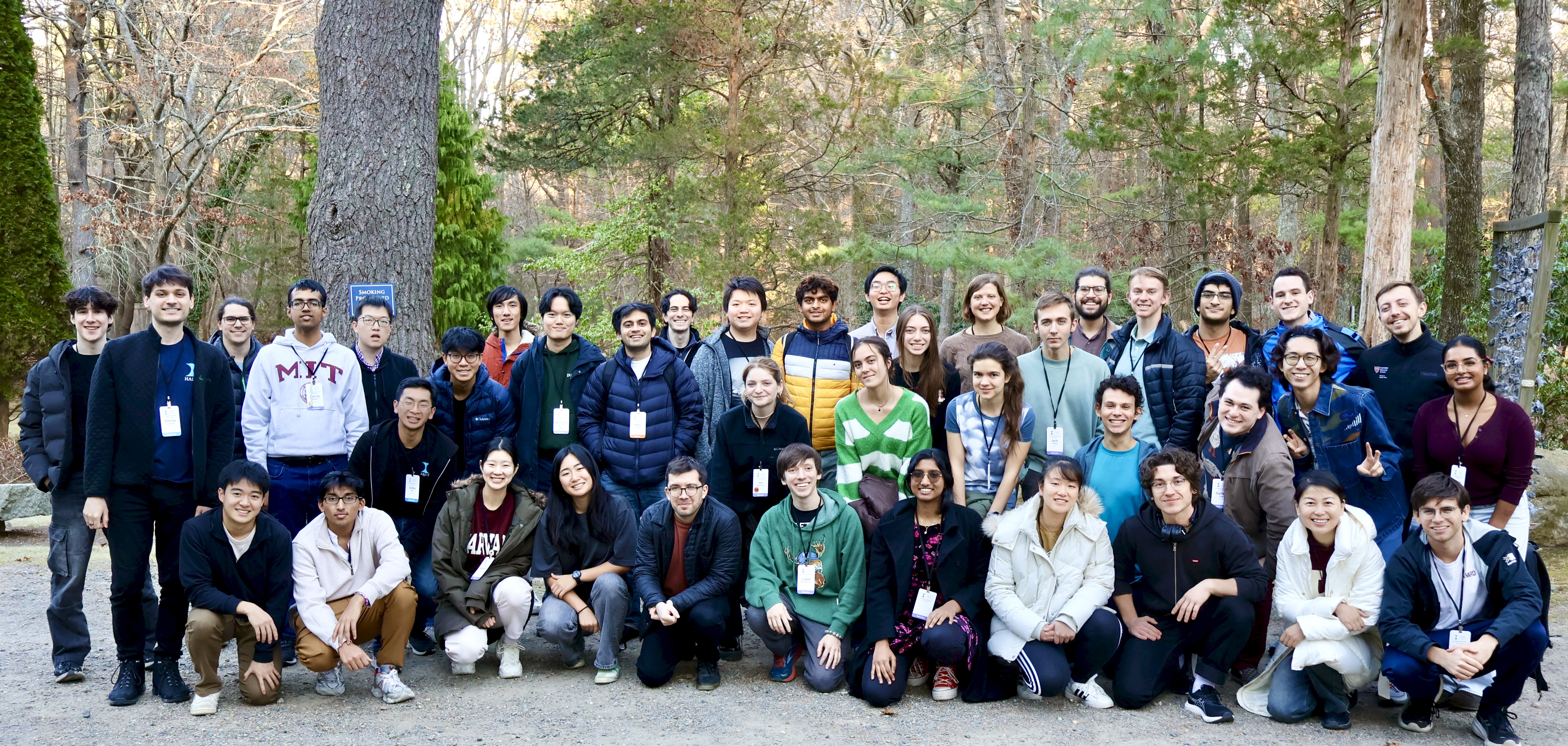
Every semester, MAIA and the AI Student Safety Team at Harvard (AISST) collaborate to run weekend retreats on AI safety. We gather students, professors, and
professionals working on AI safety to discuss and collaborate on the cutting edge of AI safety
research and policy.
In the past, we have run workshops building transformers from scratch,
replicating papers in the field, and learning from industry leaders.
Bootcamps
MAIA, in partnership with the Cambridge Boston Alignment Initiative (CBAI), hosts ML Bootcamps outside of semester time, aimed at quickly getting students up to speed in deep learning and developing skills useful for conducting AI safety research in the real world.
The bootcamp is CAMBRIA (Cambridge Bootcamp for Research in Interpretability and Alignment). It is in-person, with teaching assistants experienced with ML and AI safety research. We follow the highly-rated ARENA curriculum, which provides a thorough, hands-on introduction to state-of-the-art ML techniques (e.g. transformers, deep RL, mechanistic interpretability) and is meant to get you to the level of replicating ML papers in PyTorch. The program's only prerequisites are comfort with Python and introductory linear algebra.